
How to Start a Money-Making Blog in South Africa (2026): The Complete Beginner’s Guide
If you have been thinking about starting a blog but keep talking yourself out of it because you heard blogging is dead, this guide is going to change your mind.
Blogging is not dead. Not even close.
People search Google millions of times every single day looking for answers, recommendations, reviews, and guides. Someone in Cape Town is searching for the best budget travel destinations right now. Someone in Soweto is searching for how to save money on a low income. Someone in Durban is searching for easy recipes for a family of four. Every single one of those searches is an opportunity for a blog to show up, help that person, and earn income in the process.
What has changed is how successful blogs are built. Today a blog that makes money is not just a personal diary. It is a well-structured, SEO-optimised, mobile-friendly website that answers specific questions and earns through multiple income streams. This guide shows you exactly how to build one, step by step, whether you are starting from absolute zero or you have been thinking about it for months and just need someone to explain it in plain language.
Can You Still Make Money Blogging in South Africa?
Yes, and South Africans are doing it right now.
Here is the honest truth about how people read blogs today. Nobody sits down and reads every word from the introduction to the conclusion like they are reading a novel. What people actually do is search Google, land on a page, skim the headings, scan the bullet points, click a product link, get their answer, and leave. That is exactly why SEO matters, and that is exactly why well-built blogs are still incredibly powerful.
A good blog answers questions quickly and clearly. When your blog does that consistently, Google keeps sending people to it, day after day, month after month, often for years. That consistent traffic becomes consistent income.
The blogs that fail are the ones built without strategy. The blogs that succeed are built with the right foundation from the start.
Why Blogging Still Works in 2026
Google processes over 8.5 billion searches every single day. A significant portion of those searches lead people to blog posts. Unlike a social media post that disappears from feeds within 24 to 48 hours, a well-written blog post can rank on Google and drive traffic for three, five, or even ten years after you publish it.
Pinterest works the same way. Pins linked to blog posts continue driving readers long after you create them. Tina from Joburg started 54travelvibes.com in 2024 and within 7 months she was earning from affiliate commissions, sponsored posts, and her own digital products. She did not have a marketing degree. She had consistency and a clear niche.
Blogs also create something social media never can, which is a long-term digital asset that you own completely. Your Instagram account can be shut down tomorrow. Your blog, hosted on your own domain, belongs to you permanently.
How Bloggers Actually Make Money
Before you start building, it helps to understand how the income actually works, because a blog earns in several different ways at the same time.
Affiliate marketing is when you recommend a product or service and earn a commission when someone buys through your link. This is one of the most popular and accessible income streams for bloggers.
Display advertising is when ad networks like Google AdSense or Mediavine place ads on your blog and pay you based on how many people visit your site. The more traffic you get, the more you earn.
Sponsored content is when a brand pays you to write about their product or feature them in a post. This becomes available once your blog has a growing audience.
Digital products are things like templates, eBooks, guides, and toolkits that you sell directly to your readers. Creator Dock is built entirely around this model.
Email marketing is when you build a list of subscribers and promote products, services, or your own offerings directly to people who have already told you they want to hear from you.
Services are when your blog positions you as an expert and readers hire you directly, for coaching, consulting, writing, design, or whatever your area of knowledge is.
Most successful bloggers earn from three or four of these at the same time, which is what makes blogging such a powerful long-term income model.
Step 1: Choose a Profitable Blog Niche
Your niche is the specific topic your blog focuses on. The biggest mistake new bloggers make is choosing a topic that is too broad. A blog about “lifestyle” competes with millions of websites. A blog about “budget travel for South Africans” has a focused, specific audience with clear needs.
Profitable niches that work well in South Africa include travel, personal finance, food and recipes, parenting, self-care and wellness, fashion and beauty, blogging and making money online, home decor, and fitness.
To choose your niche, ask yourself three questions. What topic could you write about consistently for the next two years? Is there an audience actively searching for this topic on Google? Are there products, services, or affiliate programmes in this space that you can recommend and earn from?
If the answer to all three is yes, you have a viable niche.
Step 2: Buy Your Domain Name
Your domain name is your blog’s address on the internet, like creatordock.shop or anything.com. Buying your own domain is one of the most important steps because it gives your blog a professional identity and makes it easy for readers to find you and remember you.
When choosing a domain name, keep it short and easy to spell, make it relevant to your niche or your personal brand, and avoid numbers or hyphens that make it confusing to share verbally.
On the .co.za versus .com question, both work well. A .co.za signals that you are a South African blog which can help with local search rankings. A .com gives you a more international feel and works well if you want to attract readers from outside South Africa. Many South African bloggers buy both and point them to the same site.
You can purchase your domain through registrars like Hostinger, Domains.co.za, or whichever provider you prefer. Domains typically cost between R150 and R300 per year.
Step 3: Choose Reliable Blog Hosting
Your hosting is the service that keeps your blog live on the internet. Think of your domain as your address and your hosting as the actual building. Choosing the wrong hosting is one of the most common and costly mistakes new bloggers make, because slow or unreliable hosting directly affects how your blog performs on Google.
Good hosting needs to be fast, have strong uptime so your blog is always accessible, include regular backups so you never lose your work, and have solid security to protect your site from attacks.
If you are comfortable with the technical side, there are several hosting providers available to South Africans including Hostinger, Afrihost, and others worth researching based on your budget and needs.
If you would rather skip the technical setup entirely, Creator Dock offers a complete blog setup service that includes lifetime hosting for eligible clients.
Step 4: Install WordPress
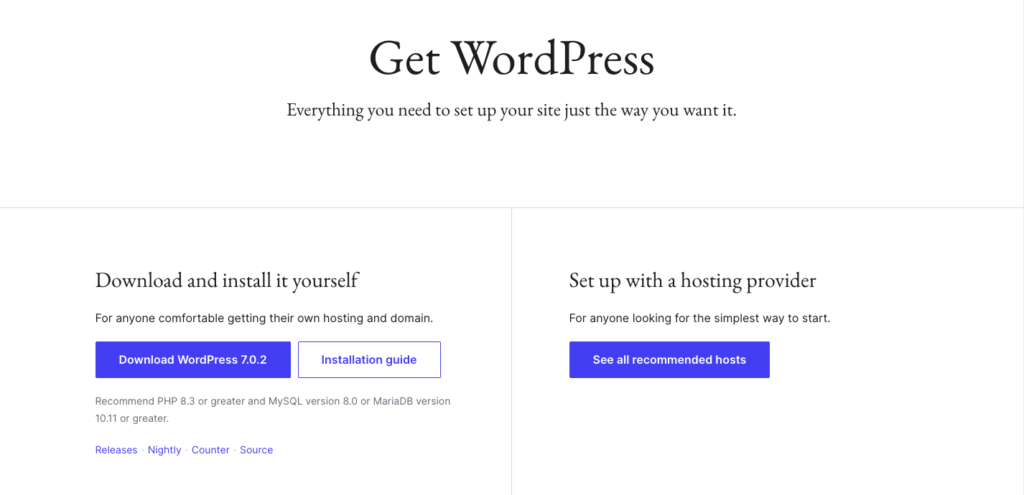
WordPress is the platform that powers over 43 percent of all websites on the internet, and it is by far the best choice for a blog you want to monetise.
The reason bloggers choose WordPress over other platforms is the flexibility it gives you. You can customise virtually every part of your blog, install plugins that add powerful features, optimise every page for SEO, and maintain complete ownership of your content. You are not locked into a platform that can change its rules or shut down your account.
WordPress is free to use. You pay for hosting and your domain, but the WordPress software itself costs nothing.
Step 5: Build Your Blog the Right Way
Once WordPress is installed, there are a few essential pages every blog needs before you start publishing content.
Your home page is the first impression readers get of your blog. It should immediately communicate what your blog is about, who it is for, and what they can find there.
Your about page is where you tell your story. Readers connect with people, not websites. A well-written about page builds trust and keeps people on your site longer.
Your contact page gives brands, readers, and potential collaborators a way to reach you. This becomes important when sponsored opportunities start coming in.
A privacy policy is not optional. It is a legal requirement, particularly if you are using Google AdSense, affiliate links, or collecting email addresses.
Your categories are the way you organise your content. Setting up a clear category structure from the beginning makes your blog easier to navigate and helps Google understand what your site is about.
Step 6: Set Up SEO Before You Publish
SEO stands for Search Engine Optimisation, and it is the practice of making your blog easy for Google to find, understand, and recommend to searchers. Setting up your SEO foundation before you write a single post saves you an enormous amount of work later.
Start by installing an SEO plugin. Rank Math is one of the best free options available and works seamlessly with WordPress.
Do keyword research before you write any post. A keyword is simply the phrase people type into Google. Tools like Google’s free Keyword Planner, Ubersuggest, or even Google’s autocomplete suggestions can help you identify what your audience is actually searching for.
Make sure your images are compressed and optimised so they don’t slow your site down. Make sure your blog is fully mobile-friendly because the majority of South African internet users browse on their phones. Set up internal linking from the start, which means linking between your own posts to help readers discover more of your content and help Google crawl your site more effectively.
Good SEO is not complicated, but it needs to be set up correctly from day one. A blog built on a strong SEO foundation from the beginning grows significantly faster than one that tries to fix SEO problems after the fact.
Step 7: Join Affiliate Programmes
Affiliate marketing is the income stream most beginner bloggers can access first, and it is one of the most reliable ways to earn from a blog at every stage of growth.
The way it works is simple. You join an affiliate programme, you get a unique tracking link, you include that link naturally in your blog content, and when a reader clicks your link and makes a purchase, you earn a commission.
Programmes that work well for South African bloggers include Amazon Associates, which is global and covers millions of products, Impact.com which includes brands like Canva, Fiverr, and many others, Awin which is strong in European and UK brands, Booking.com and other travel affiliate programmes which work extremely well for travel blogs, and Takealot’s affiliate programme for local rand-based commissions.
The key to affiliate marketing working on your blog is relevance. Only recommend products that are genuinely useful to your specific readers. Readers trust bloggers who recommend things honestly, and that trust is what drives clicks and conversions.
DIY vs Done-for-You Blog Setup
Building a blog yourself is absolutely possible, and this guide gives you everything you need to do it. That said, the technical setup, WordPress configuration, plugin installation, SEO foundation, and design work can take weeks of learning and troubleshooting if you are starting from scratch.
Here is an honest comparison.
When you do it yourself, you learn everything independently, configure WordPress on your own, install and configure all the plugins, design your site from scratch, learn SEO as you go, find relevant affiliate programmes yourself, and deal with any ongoing technical issues alone.
When you use Creator Dock’s blog setup service, we handle the complete technical setup for you. You get a fully configured WordPress installation, a professional mobile-responsive design, a complete SEO-ready foundation, all essential plugins installed and configured, a clear category structure, a fully designed home page, about page, contact page, and privacy policy, an affiliate-ready site structure with relevant programme recommendations, speed optimisation, and basic security setup, all with lifetime hosting included for eligible clients.
The investment for the Creator Dock blog setup service is R2,999.
If you have the time and enjoy learning the technical side, doing it yourself is a great option. If you want to skip straight to creating content and growing your audience, our done-for-you setup gets you there immediately.
Get Your Blog Professionally Set Up at creatordock.shop or email us at info@creatordock.shop
Frequently Asked Questions
Can I make money blogging in South Africa?
Yes. South African bloggers earn from affiliate commissions, display advertising, sponsored content, digital products, and services. The income potential grows significantly over time as your traffic increases. Many South African bloggers earn between R5,000 and R30,000 a month within their first two years, and some earn well beyond that.
How long does it take to start earning from a blog?
Most bloggers start seeing small earnings within the first three to six months if they are consistent with content and have set up affiliate programmes from the beginning. Meaningful, consistent income typically comes between month six and month eighteen. Blogs that are built on a strong SEO foundation from day one tend to grow faster.
Do I need technical skills to start a blog?
If you use Creator Dock’s blog setup service, you need no technical skills at all. We handle everything and hand you a fully built, ready-to-publish blog. If you choose to build it yourself, WordPress is designed to be user-friendly and there are thousands of tutorials available. Basic technical confidence helps but is not required.
Do I need to use WordPress?
You do not have to, but we strongly recommend it. WordPress gives you more flexibility, more control, better SEO capability, and complete ownership of your content than any other platform available. Free platforms like Blogger or Wix are tempting because of the zero cost, but they limit what you can do and you never fully own your content in the same way.
What does the Creator Dock blog setup service include?
It includes domain connection, a professional WordPress installation, mobile-responsive design, full SEO-ready setup, essential plugins configured, your category structure, home page, about page, contact page, privacy policy, affiliate-ready structure, relevant affiliate programme recommendations, speed optimisation, basic security setup, and lifetime hosting for eligible clients. The full details and any applicable terms are available on our service page at creatordock.shop.
Final Thoughts
Building a profitable blog is not about publishing hundreds of random articles and hoping something sticks. It is about creating a strong foundation, choosing the right niche, understanding SEO, and consistently publishing content that genuinely helps people.
The bloggers who succeed are not always the most talented writers. They are the ones who started, stayed consistent, and treated their blog like a real business from day one.
Whether you build it yourself using the steps in this guide or choose a done-for-you setup through Creator Dock, the most important step is the same one it has always been.
Get started.
Ready to launch your blog? Visit creatordock.shop to browse our digital products or enquire about our professional blog setup service.